


ECE, Teacher Training (Associates)
Shape Young Minds: Early Childhood Education
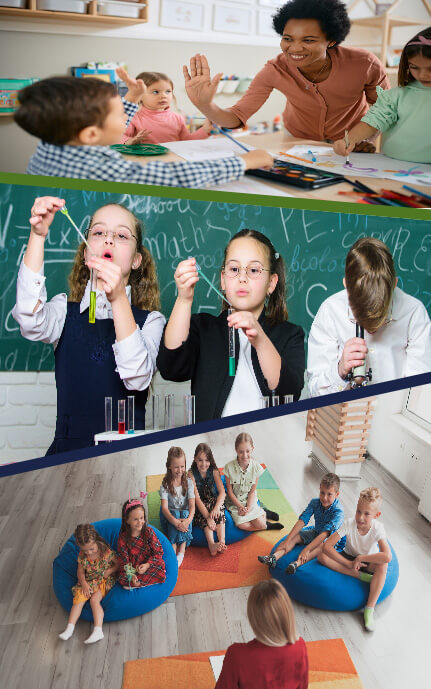
The Early Childhood Education program prepares you to make a lasting impact on the lives of children from birth through age eight. Through a mix of coursework and hands-on experience, you’ll learn how to nurture the cognitive, physical, social, and emotional development of young learners in diverse educational settings.
What You’ll Learn
This program combines theory with real-world practice under the supervision of qualified teachers. Coursework includes:
- Child Growth & Development: Understand how children learn and grow across all developmental stages.
- Health & Nutrition: Learn how to meet children’s physical and nutritional needs for optimal development.
- Care & Guidance: Develop effective strategies for supporting children’s emotional and social well-being.
- Communication Skills: Build strong partnerships with families and engage children in meaningful ways.
By fostering creativity, critical thinking, and foundational skills, you’ll gain the tools to plan and implement developmentally appropriate programs for early learners.
Career Opportunities
Graduates are prepared for roles such as:
- Preschool Teacher
- Childcare Center Staff
- Head Start Program Educator
- School-Age Program Leader
Whether you’re working in child development centers, recreational programs, or schools, your training will make you an invaluable advocate for young children.
Interested?
Find out by filling out the form below, we can't wait to chat with you!
A55220C (Associate Degree) D55220C (Diploma)
C55220C (Certificate)
C55290C (Certificate-Infant Toddler Care)
C55850 (Certificate- Early Childhood Administration
The Early Childhood Education curriculum prepares individuals to work with children from birth through eight in diverse learning environments. Students will combine learned theories with practice in actual settings with young children under the supervision of qualified teachers.
Course work includes child growth and development; physical/nutritional needs of children; care and guidance of children; and communication skills with families and children. Students will foster the cognitive/language, physical/motor, social/emotional, and creative development of young children.
Graduates are prepared to plan and implement developmentally appropriate programs in early childhood settings. Employment opportunities include child development and child care programs, preschools, public and private schools, recreational centers, Head Start Programs, and school-age programs.
In addition to the courses listed below, students may be required to take transition/co-requisite classes based on RISE criteria. These classes do not count toward hours required for graduation.